Indonesia is no longer simply discovering padel; it is entering the difficult but commercially exciting stage of turning padel enthusiasm into a sustainable sporting-goods industry. In only a few years, the sport has moved from a small expatriate and hospitality activity in Bali and Jakarta into a visible urban lifestyle involving professionals, entrepreneurs, celebrities, families, and competitive athletes. Indonesia reportedly ended 2025 with approximately 947 courts across 293 clubs, compared with only 134 courts a year earlier, although different industry reports produce significantly different totals. That inconsistency matters: businesses should treat spectacular growth claims carefully and base investment decisions on club-level bookings, equipment sales, and repeat-player data rather than promotional headlines. Nevertheless, the direction is unmistakable. Indonesia has become one of Asia’s most talked-about padel markets, while worldwide participation has reached approximately 19.4 million players, supported by 58,300 courts and nearly 20,000 clubs. Playtomic projects the global network could reach around 91,000 courts by 2028. Playtomic’s Global Padel Report 2026 confirms that padel is developing into a substantial international sports economy rather than remaining a temporary European trend.
The real commercial opportunity is not the court itself but the recurring spending that begins after someone plays for the first time. A court is built once, but players continually purchase racquets, balls, grips, protectors, shoes, clothing, bags, recovery products, and eventually replacement racquets. A beginner may initially borrow a club racquet, but after four or five enjoyable sessions, owning one becomes both practical and emotional. It signals that the customer now considers himself or herself a padel player. An entry-level racquet may sell in Indonesia for approximately IDR1 million to IDR2 million, a dependable intermediate model for IDR2 million to IDR4 million, and a premium carbon racquet for IDR4 million to IDR7 million or more. Add shoes, a bag, grips, balls, and clothing, and the first-year equipment value of one committed player can easily reach IDR5 million to IDR10 million. If only 50,000 active Indonesian players spent an average of IDR4 million annually, the addressable equipment economy would already reach IDR200 billion per year. This is an illustrative scenario rather than an audited market total, but it shows why retailers should focus on player conversion and retention—not merely on counting newly constructed courts.
Padel grows quickly because its learning curve is friendly, its social character is strong, and its equipment is highly visible. A new tennis player can spend months learning to serve and maintain a rally, while a beginner in padel can often participate in an enjoyable doubles game during the first session. The smaller 10-by-20-metre court, underarm serve, surrounding walls, and four-person format produce longer rallies and more conversation. This makes padel suitable for corporate networking, family recreation, community gatherings, and lifestyle content. Every match also exposes four players to one another’s equipment. Someone arrives with a NOX AT10, Adidas Metalbone, Bullpadel Vertex, Head Speed, Babolat Technical Viper, or Wilson Bela, and the other players naturally ask about its balance, surface, weight, and price. In this environment, the racquet becomes equipment, identity, conversation starter, and social-media prop at the same time. That is a powerful combination for consumer-product growth because purchase decisions spread through trusted playing groups rather than through conventional advertising alone.
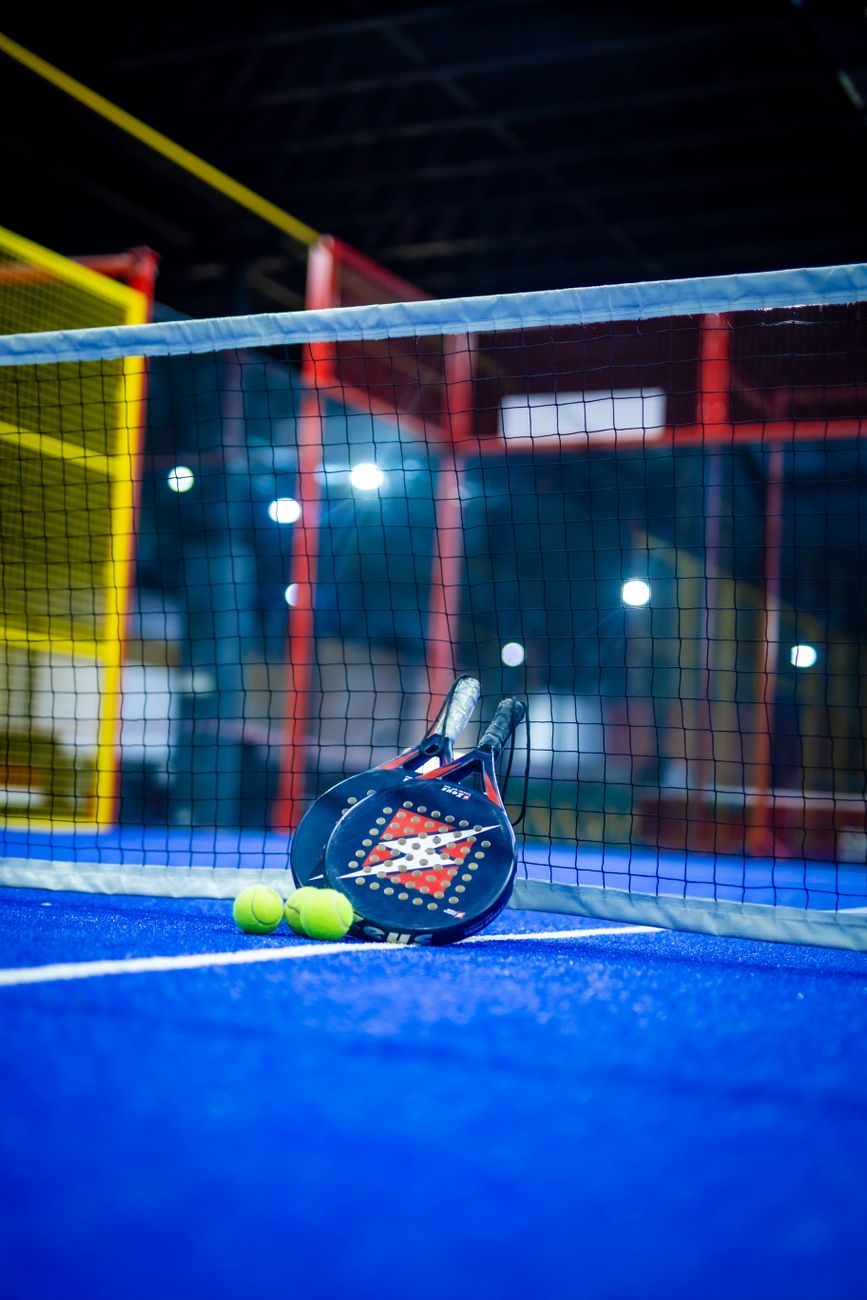
The technical nature of the racquet also creates a natural upgrade cycle. An official racquet cannot exceed approximately 45.5 centimetres in length, 26 centimetres in width, and 38 millimetres in thickness, but enormous product variation exists inside those limits. Round racquets normally offer a larger sweet spot and greater control, making them suitable for beginners. Teardrop shapes balance control and attacking power, while diamond-shaped, head-heavy racquets reward advanced players who generate fast overhead shots. Fibreglass faces are generally softer and more forgiving; 3K, 12K, or 18K carbon constructions tend to feel firmer and respond differently according to the resin, layup, frame, and foam underneath. Soft EVA can improve comfort and ball output at lower swing speeds, while harder EVA may deliver more precision and power for technically developed players. Racquets commonly weigh around 350–375 grams, but even a ten-gram difference can materially affect manoeuvrability and arm fatigue. The winning Indonesian retailer will not merely sell the most expensive racquet; it will translate these technical choices into simple recommendations that prevent customers from buying the wrong product.
Indonesia’s climate makes product selection even more important. Heat and humidity can alter the feeling of foam, accelerate grip deterioration, affect ball pressure, and shorten the usable life of equipment left inside a hot vehicle. Outdoor courts in Bali, Jakarta, Surabaya, and other tropical locations also expose products to moisture, ultraviolet radiation, and rapid temperature changes. Retailers should therefore offer climate-relevant education: rotate overgrips frequently, store racquets away from direct sunlight, dry the frame and wrist strap after play, inspect the surface for cracks, and avoid leaving pressurised balls in extreme heat. Padel balls may look like tennis balls, but their pressure and performance characteristics are designed for the smaller enclosed court. Regulation balls generally weigh approximately 56–59.4 grams. Selling ordinary tennis balls as an interchangeable substitute may create a disappointing playing experience. Education is commercially valuable because customers who understand why balls, grips, and protectors matter are more likely to purchase them regularly. Official equipment and competition documents are available through the International Padel Federation.
Global brands are benefiting from Indonesia’s growth, but no single company has permanently captured the Indonesian customer. NOX has strong credibility through professional-player associations and models such as the AT10; Bullpadel is recognised for the Vertex, Hack, and XPLO families; Adidas attracts consumers through Metalbone and Adipower; Head benefits from its wider racquet-sports reputation; Babolat can convert tennis customers through its Technical Viper and related lines; and Wilson connects equipment with the identity of celebrated athletes such as Fernando Belasteguín. Siux, StarVie, Oxdog, Tecnifibre, Osaka, and emerging Asian labels add further competition. This fragmented environment gives a local specialist room to become the trusted curator. The retailer does not need to carry every model. It needs a disciplined assortment: perhaps five beginner racquets, eight intermediate models, five premium options, junior equipment, and a carefully selected range of shoes and accessories. A curated portfolio of twenty understandable choices will frequently outperform a warehouse containing two hundred confusing products.
Indonesia’s competitive calendar is helping transform equipment from lifestyle merchandise into performance merchandise. In 2025, the national ecosystem included the Indonesia Open Circuit, GoFood National Padel Circuit events, player licensing, provincial organisation, and Indonesia’s first Cupra FIP Tour event. The official FIP calendar subsequently included an indoor FIP Bronze Jakarta event in July 2026, carrying €8,500 in prize money. PBPI’s event coverage shows activity extending through Jakarta, Bali, Bandung, Surabaya, Banten, Yogyakarta, and West Java. As competition becomes more organised, players care more about surface texture, balance, control, shoe traction, ball consistency, and backup racquets. Tournament participation also creates immediate retail moments: pre-event restringing is irrelevant because padel racquets have no strings, but grip replacement, frame protection, shoe fitting, ball sales, apparel, hydration, and emergency racquet replacement are highly relevant. Tournament retail should be treated as a mobile showroom, product-testing laboratory, and customer-acquisition channel—not simply as a sponsorship expense.
Indonesia can ultimately influence the world padel market because it offers a combination that Europe cannot easily reproduce: a huge young population, powerful social commerce, tropical tourism, relatively short regional shipping routes, and year-round play. Bali can become a padel-tourism and brand-launch destination; Jakarta can drive premium retail, corporate leagues, and high-volume communities; Surabaya and Bandung can develop strong regional circuits; while Lombok and other destinations can connect padel with resorts and academies. A Rafa Nadal Tennis Center planned for Lombok for 2028 is expected to include four tennis and four padel courts, illustrating how international sports education, hospitality, and property development may converge in Indonesia. Indonesian players can also become valuable testers of tropical-performance products, including humidity-resistant grips, ventilated bags, lightweight clothing, durable outdoor shoes, and packaging designed for wet climates. Indonesia should not remain only an importer of European products; it can become an Asian testing ground, content centre, tourism destination, and eventually a source of locally designed equipment.
Why should you ship with SindoShipping and how is our company able to help you and your business to ship your goods and products to Indonesia?
Our company vision is to help companies around the world to be able to export their products to Indonesia with ease and expand their market worldwide especially in South East Asia as Indonesia is the leading internet market and largest economy around the region and to help ease the process of importation to the country and we want to help millions of Indonesian to access products worldwide with effective shipping system.
With the proper documentation and brokerage, we are able to help our customers ship a few categories of goods which have limited restrictions to Indonesia without any hassle to the customers address directly as we understand the process and the regulation of the imports including the taxation process of imports.
SindoShipping specialized in electronics, high tech products, cosmetics, luxury branded, toys, supplement and vitamins, fashion, bags and shoes, and traditional medicine shipping to Indonesia since 2014 with the top accuracy of shipment service and the live tracking available during the cross border shipment so the customer can feel safe and secure about their shipping. Contact us now for further details at 6588677261 and visit out site sindoshipping.com